Cayena – Punch Needle Rug: A Small Business Embroidery Review
As an embroidery designer who works daily with small businesses—from corner cafés to handmade boutiques—I’m always on the lookout for design assets that can be turned into branded merchandise with real staying power. When I first opened the Cayena – Punch Needle Rug pattern, I saw a tropical flower that could easily become the heart of a custom apparel line, a signature embroidered patch, or a recurring motif across aprons, caps, and tote bags. This is a hand embroidery pattern, but as a graphic, it offers a strong starting point for machine embroidery design if you’re willing to digitize it thoughtfully. Here’s my in-depth review from a business-focused, production-minded perspective.
First Impressions: A Lush Tropical Bloom with Brand Potential
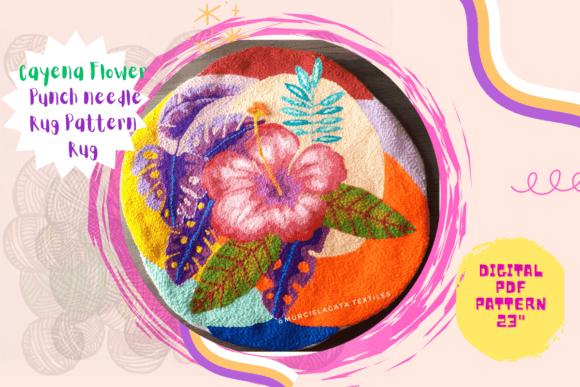
The Cayena pattern is inspired by the Cayenne flower, a South American native that blooms year‑round. Right away, the design radiates warmth, exotic charm, and a touch of the handmade. It’s not a stiff, corporate icon—it’s organic, fluid, and full of life. For a small business merch piece, that matters. The flower feels approachable, almost artisanal, which aligns perfectly with brands that want to communicate personality, creativity, and a connection to nature. I can easily imagine this on a florist’s apron, a coffee shop’s cap, or a boutique’s tote bag. The design reads as bold yet elegant, decorative without being fussy. Because it’s based on a real flower, it carries a universal appeal—people recognize it, and that instant recognition can build brand identity faster than a purely abstract shape.
From Hand Embroidery Pattern to Digital Embroidery File
The product is listed as a Hand Embroidery Patterns and Graphics resource, which means it arrives as a digital pattern intended for punch needle rugs. As an embroidery designer, I see this as a valuable design asset, not a ready‑to‑stitch embroidery file. To use it on a multi‑needle machine for apron embroidery or cap embroidery, you’ll need to digitize the artwork, setting stitch types, densities, and pull compensations. The good news is that the graphic’s organic lines are forgiving—slight deviations in satin stitches won’t destroy the look, which is a huge plus for handmade product businesses that want a slightly imperfect, authentic feel. Before going further, always check the commercial licensing of the digital file. If you plan to sell finished products with this design, you need explicit permission; the pattern’s description doesn’t clarify that, so reach out to the creator or verify the terms before production.
Evaluating Cayena for Branded Patches and Apparel
When I test a design for small business merch, I mentally place it on a dozen real‑world items. Here’s how Cayena might perform across the most common merchandising products:
- Embroidered patch: The flower’s silhouette works beautifully as a standalone patch. Its rounded, petal‑heavy shape creates a natural border that doesn’t need a heavy merrowed edge. It could be a chest logo accent on a denim jacket or a sleeve detail on a work shirt.
- Staff uniforms and aprons: Placed on the left chest of a polo or the bib of a bistro apron, the Cayena bloom becomes a subtle, welcoming brand mark. It’s decorative enough to feel premium but not so loud that it overwhelms the uniform.
- Caps: The front panel of a dad cap or a structured snapback offers a decent canvas. However, the curve of the cap demands careful placement—center the flower slightly above the seam and test the curvature; a design that’s too wide may distort at the edges.
- Tote bags: This is where the pattern can truly shine. A large, single‑color or multi‑color rendition of Cayena on a canvas tote bag gives a finished product that feels like a boutique item. Because totes are often flat, the design can be stitched without worrying about fabric distortion as much as on a curved cap.
- Product packaging accents: Even a tiny version of the flower on a fabric tag, a ribbon, or a small pouch can tie a brand’s visual identity together. Think of a bakery stamping a mini Cayena on bread bags—it’s memorable.
Where You Should Use the Design Carefully
No design is perfect for every application, and Cayena comes with a few cautions that a smart commercial embroidery operator will respect.
- Small patch sizes: If you shrink the flower below 1.5 inches, the petal details risk merging into a blur. Always test at small patch size before committing to a run. The open spaces between petals may close up, turning the bloom into a vague blob.
- Cap fronts and curved surfaces: As mentioned, the design’s width can be a problem on sharply curved panels. Use a cap hoop and a stabilizer that controls the fabric’s stretch, and consider a slightly smaller placement instead of forcing the full design onto the front.
- Tiny lettering or hidden details: The graphic doesn’t seem to include text, but if you add a brand name, keep it minimal. Small text on a textured fabric becomes illegible, and high stitch density in a compact area can cause puckering.
- Dark uniforms and high‑contrast fabrics: The tropical flower likely uses a mix of warm, vibrant colors. On a black polo or a navy apron, low‑contrast threads will disappear. Choose thread colors that pop against the background, and run a test to see how the fabric texture affects the stitch definition.
- Frequent washing: If the finished item goes into commercial laundry cycles, delicate satin stitches may snag. Consider a stitch type that’s more durable, like a tatami fill under the petals, and always use a soft backing that won’t scratch the skin.
How Cayena Enhances Brand Identity and Customer Connection
A tropical flower on your merchandise isn’t just decoration; it’s a mood. Cayena communicates warmth, hospitality, and a touch of the exotic. For a small business like a café, it can become the signature bloom that customers associate with your handcrafted drinks. For a boutique, it adds a layer of artisanal credibility—shoppers feel they’re buying from a curated, thoughtful brand, not a mass‑produced line. The design’s handmade product vibe reinforces trust; when a patch or an apron shows a design that looks like it could have been stitched by hand, it suggests the brand cares about craftsmanship. Over time, that visual consistency across custom apparel, tote bags, and staff uniforms builds recognition. A customer who sees the Cayena patch on a barista’s cap and then on a tote bag in the window instantly connects the two, strengthening the brand memory. This kind of subtle, repeated exposure is what turns a one‑time buyer into a loyal follower.
Designer’s Practical Checklist Before Production
Before you invest in a large run of embroidered items, I always recommend this step‑by‑step validation. Use it as your pre‑production routine for Cayena.
- Test in black and white first. Print the graphic in grayscale to see if the composition holds without color. If the flower loses its shape, you’ll need to adjust line weights.
- Check legibility at small patch size. Print the design at the intended embroidery size and view it from a few feet away. Can you still tell it’s a flower?
- Review thread color contrast. Choose thread colors that match your brand palette but also stand out from the garment fabric. Test on a swatch of the actual material.
- Inspect spacing between elements. If the petals are too close, they’ll merge into a solid mass. Digitize with a tiny gap or use a contrasting color to keep the definition.
- Confirm the hoop size. Measure the design and make sure it fits comfortably in your hoop without forcing the fabric. For caps, use a dedicated cap hoop.
- Test on real fabric. Stitch a sample on the exact shirt, apron, or tote bag you’ll use. Look for puckering, thread breaks, and distortion.
- Use proper stabilizer. For stretchy fabrics, a cut‑away stabilizer is non‑negotiable. For woven fabrics, a tear‑away may suffice. Always match the stabilizer to the fabric texture and stitch density.
- Create a printable mockup. Before the client approves, show them a digital mockup of the embroidered product. This avoids misunderstandings about placement and scale.
- Compare with other design assets. Place the Cayena patch beside your logo, other patterns, and existing merchandise. Does it feel like part of the family? If not, adjust the thread palette or simplify the design.
- Confirm commercial licensing. Since this is a digital embroidery file pattern, ensure you have the right to reproduce it on items you sell. The pattern is a hand embroidery resource, and the license may restrict machine‑embroidered commercial use.
Final Thoughts: Is Cayena the Right Bloom for Your Merch Line?
The Cayena – Punch Needle Rug pattern is a visually rich, tropical design that can bridge the gap between handcrafted charm and professional brand identity. As an embroidery designer, I appreciate its organic shapes, its storytelling potential, and its adaptability across a range of merchandise—from apron embroidery to cap embroidery and beyond. The main challenge is translating a hand embroidery pattern into a machine‑ready format, but with careful digitizing, thread selection, and testing, it can become a standout feature of your small business merch. For any brand that wants to feel warm, creative, and connected to nature, Cayena offers a bloom that, with a little care, will keep flowering on every product you produce.