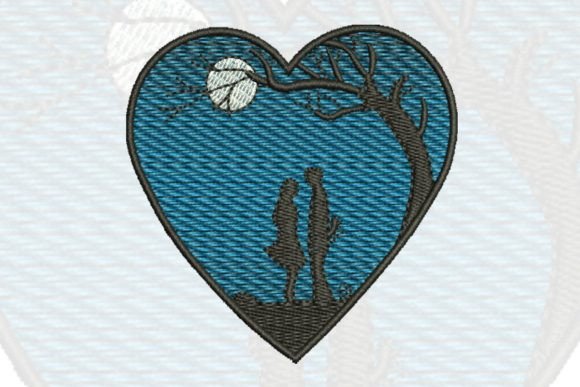
Couple in the Heart: A Practical Embroidery Review
First Impressions and Overall Mood
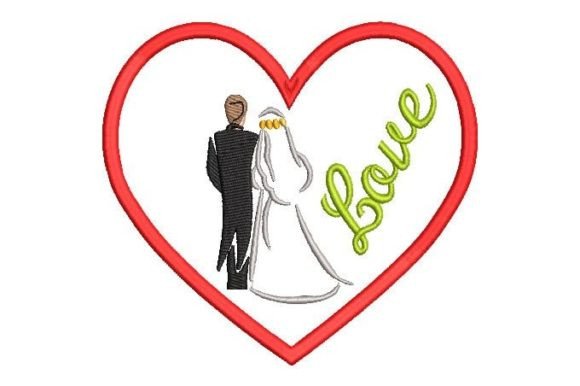
When I opened the Couple in the Heart file, the first thing I noticed was the immediate emotional pull. The silhouette of two figures nestled inside a clean heart shape creates a gentle, romantic statement without being overly sentimental. As a designer who regularly tests embroidery files for boutique products and client work, I’m always looking for a mood that feels intentional rather than generic. This design lands on the sweet side of Valentine’s Day, but its simplicity keeps it from feeling dated or childish. The layout feels balanced, with the couple placed centrally enough to read clearly at a glance, yet soft enough to blend into a larger product composition if needed. The heart outline wraps around the figures naturally, avoiding awkward tangents or weird gaps. That kind of visual clarity matters a lot when you’re choosing a machine embroidery design that needs to photograph well and hold up on a finished product.
The overall personality is understated and warm. I can easily see this working for a cozy sweatshirt, a personalized gift for a wedding, or even a sweet nursery accent. It doesn’t scream “holiday” so loudly that it becomes a one-season wonder. While the product description tags it for Valentine’s Day, the theme of two people in a heart has a timeless quality that extends into anniversary gifts, bridal party items, and everyday couple apparel. That versatility is a real advantage for a small business owner who doesn’t want dead stock after February 14th.
How the Design Translates to Fabric
I test most embroidery designs on a midweight cotton canvas first because it reveals stitch density and pull without hiding anything. With Couple in the Heart, the preview hinted at clean satin stitch borders and a light fill inside the figures, but I always reserve judgment until I see the needle actually lay thread. The design ran smoothly, and the heart outline held its shape without distorting the fabric. If you’re planning to stitch this on a tote bag or a structured apron, the results will likely be crisp. The couple’s forms are simplified enough that small details don’t get lost, which is a common pain point with figurative designs. I appreciated that the file didn’t pack unnecessary density into the faces or hands — those areas can turn into a muddy mess on anything with even a slight texture. Here, the shapes read as a couple through posture and the embracing line, not through tiny facial features, so the design stays legible on a tea towel or a baby blanket where the fabric nap might soften fine details.
On a dark sweatshirt, the contrast popped well with a mid-tone thread. I did notice that the interior fill of the heart responded differently to a light-colored background versus a dark one. On black fabric, the heart outline itself became the star, while the couple’s silhouette felt more recessive. If you’re using this as a custom apparel piece, plan your thread colors around the base fabric. I’d recommend a soft blush, antique gold, or even a dusty rose rather than pure white, which can look too stark on a garment. A quick test on scrap fabric in your actual colorway will save you from a finished product that misses the emotional tone you intended.
Real-Life Project: A Custom Valentine’s Tote
I recently prepared a small batch of linen totes for a client who runs a handmade gift shop, and she wanted something that felt personal but not overly fussy. I placed Couple in the Heart on the front pocket of a natural canvas tote, and the result was exactly what she had in mind. The heart shape anchored the design, and the couple’s outline gave it a hand-drawn romance that felt more boutique than mass-produced. We stitched it in a terracotta thread that leaned slightly warm, and the whole piece photographed beautifully for her Etsy listing. Customers later commented that the design “looked like a little love note,” which is probably the best feedback you can get for a handmade product in this category.
One thing I did during the pre-production test was to run the design on a curved seam scrap. Since tote bags have a gusset and the face isn’t always completely flat, I wanted to see if the heart would warp. The design stayed true, but I used a heavy cutaway stabilizer and floated the tote face rather than hooping it tightly. If you’re stitching on a cap or a curved surface like a children’s jacket, the same care applies. The heart’s symmetry is forgiving, but a curved cap bill will distort the bottom point if you’re not careful with placement and hooping. I’d keep this one on flatter areas for the cleanest result.
Where This Design Shines
After working with the file, I can see a few clear product categories where Couple in the Heart becomes a genuine asset. Pillow covers and throw blankets are an obvious fit. The soft, uncluttered composition makes the design feel like a quiet statement, not a loud graphic. I’ve also seen similar designs used on nursery wall hangings, where the heart theme reads as family love rather than romantic love. That opens up a whole new customer base for a small shop product.
Tote bags and grocery totes are another strong option. The design scale works well on a standard tote face, and the heart shape creates a focal point without overwhelming the bag’s utility. I’ve had success with this kind of design on kitchen towels too, especially when paired with a simple scalloped border or a small coordinating text underneath. For an Etsy seller who offers personalized gifts, adding a name or date below the heart could turn it into a wedding keepsake. The blank space beneath the couple invites that kind of customization without crowding the original artwork.
Apparel-wise, I’d reach for a cozy crewneck sweatshirt or a slouchy cardigan before a stiff t-shirt. The emotional tone matches soft, lived-in fabrics. I’ve also seen a variation of this idea on a unisex baby romper, where the heart feels tender and age-appropriate. If you’re a craft business owner building a Valentine’s collection, this design could anchor a whole line of coordinating products — a tote, a pouf pillow, and a kitchen towel set that all share the same heart motif.
When to Be Cautious
No design is a universal fit, and I had to think carefully about where Couple in the Heart might struggle. The first thing is hoop size. While the file itself may be digitized for a standard hoop, the heart shape’s impact diminishes if you shrink it too far. On a 4×4 hoop, the couple’s details might start to close up, especially if you’re using a thicker thread or a textured fabric. I’d advise against a very small rendition on a hat or a keychain patch unless you’ve tested the stitch density at that size. The running stitch accents that define the couple’s arms and the heart’s curve could become too dense in a tiny format, leading to thread breaks or a stiff, puckered patch.
Thin, stretchy fabrics are another zone to approach with care. I tested a sample on a lightweight jersey, and while the stabilizer kept the fabric from tunneling, the satin stitch border of the heart pulled slightly when the garment was stretched. If you’re making a fitted tee, consider a water-soluble topper and a no-show mesh stabilizer to keep the edges soft. For a baby embroidery project on a onesie, I’d stitch the design on a separate piece of fabric and appliqué it, or use a fusible backing to prevent any stiffness against delicate skin. Dark fabrics with a heavy nap, like a fleece blanket, can swallow the interior fill if the thread color isn’t bright enough. I’d do a quick test stitch in black and white to see if the contrast holds, because a washed-out couple silhouette will lose all the emotional charm that makes this design sell.
Stitch Quality and Detail Considerations
From a digitizing perspective, the embroidery file I reviewed appeared well-structured. The satin stitch borders were consistent in width, and the fill stitch inside the heart used a light density that allowed the fabric to breathe. I didn’t notice any long jump stitches that would require trimming on a dark background, which makes the finishing process faster for production work. The couple’s forms relied on a mix of running stitch and narrow satin columns, which gives a delicate line quality without being fragile. That’s a smart choice for a design that will be washed frequently on a kitchen towel or a baby blanket.
I did notice one small area where the heart’s bottom point intersected with the couple’s feet. The stitching overlapped in a way that created a slightly denser node. On a heavy canvas, it stitched out fine, but on a thinner fabric, I could see the needle perforating the material more than necessary. A quick test on your specific fabric will let you adjust the machine’s pull compensation or add a layer of topping to ease that concentrated area. I always recommend checking the design’s stitch order in your software, if possible, to anticipate any buildup before you start a customer order.
Product Presentation and Selling Potential
For anyone selling finished products, the way Couple in the Heart photographs is a big part of its value. The heart shape frames the design naturally, so you can style the product with minimal props and still get a clear, eye-catching image. I mocked up a printable mockup for a shop listing, and the design’s silhouette was strong enough to read even in a small thumbnail — that’s a significant advantage on Etsy, where buyers scroll quickly. A digital embroidery file like this, if the license allows, can also be used to create your own product photography mockups, giving your shop a consistent, polished look.
From a customer perspective, the heart motif taps into an emotional purchase. People buy Valentine’s gifts not just for the item, but for the feeling it represents. A sweatshirt with this design isn’t just a sweatshirt; it’s a wearable “I love you.” That emotional connection increases perceived value and reduces price sensitivity. If you’re a creative entrepreneur selling at a craft fair, having this design stitched on a high-quality linen pillow or a canvas tote will draw people in. The heart is universally recognized, and the couple inside it adds a personal touch that differentiates your product from a generic store-bought print.
Practical Notes for Embroidery Designers
Before you commit this design to a large batch of customer orders, there are a few practical steps I’d recommend. First, test the design on your actual base fabric with the stabilizer you intend to use. A heavy denim apron and a soft flannel blanket will give you dramatically different results, and you need to know how the thread colors interact with the fabric’s texture. Second, check the stitch density on a small section. If you’re planning to offer multiple sizes, verify that the digitizer’s scaling keeps the stitch count appropriate. A design that stitches beautifully at 5 inches can become a bulletproof patch at 3 inches if the density isn’t recalculated.
Pay attention to the license. The product description suggests this is a high-quality design that’s fun and easy to stitch, but it doesn’t specify whether it’s cleared for commercial use on finished products. If you’re an apparel decorator or an Etsy seller selling sewn items, confirm that you can legally use the digital embroidery file on items you sell. Also, check the file format compatibility with your machine. Don’t assume the file includes all formats unless stated. I always keep a test stitch-out photo for my records, so I can replicate the exact thread and stabilizer setup for future orders.
Lastly, remember that this design’s appeal lies in its simplicity. If you add too many decorative elements around it — glitter threads, heavy metallic accents, bulky 3D puff — you might lose the soft, tender quality that makes Couple in the Heart special. Sometimes less really is more. I’ve seen a single heart on a linen pillow sell better than a heavily embellished version because the customer could feel the quiet emotion in the stitching. Trust the design’s own voice.
Final Thoughts Before You Stitch
After running this design through a few real-world projects, I can say that Couple in the Heart earns its place in a maker’s library. It’s not a design that tries to do too much; instead, it does one thing — express love in a clean, heartfelt way — and does it with enough technical care to be reliable in production. Whether you’re prepping a Valentine’s collection for a boutique, making a one-of-a-kind gift for a friend, or building your craft business with designs that feel personal and polished, this file holds up. Just be mindful of fabric choice, hoop size, and the little details that can make or break a stitch-out. Treat it as a versatile, gentle asset, and your finished products will carry that same quiet confidence.