Don’t Worry Be Hippie Boho Embroidery: A Pro Designer’s Review
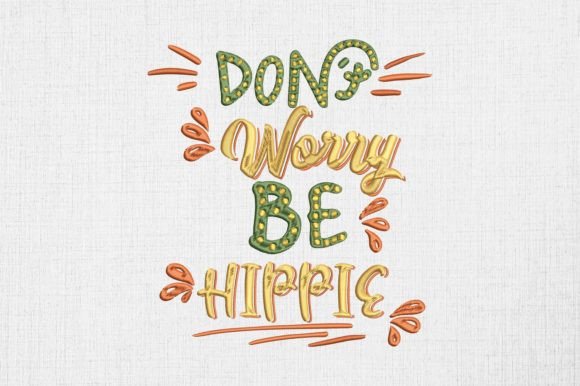
Right out of the digital folder, Don t Worry Be Hippie Boho feels like a breath of fresh air. It carries that effortless, free-spirited energy so many small business owners want to capture in their branded merchandise. The boho aesthetic is deceptively simple—it has to look relaxed and organic, but the embroidery file itself needs to be engineered with precision. This design strikes that balance. The letters dance with a hand-drawn rhythm, the curves feel intentional, and the overall composition shouts warmth without being messy. For a boutique, a café, a florist, or a handmade soap brand, this is exactly the kind of visual personality that turns a plain tee or tote bag into a piece of wearable storytelling.
The first thing I do when evaluating any machine embroidery design for client work is imagine it on multiple surfaces. Don t Worry Be Hippie Boho passes the litmus test instantly. It will beautifully complement t-shirts, dresses, scarves, and home decor, as the product description notes, but I see it going much further. Picture it as a chest patch on a linen apron in a bakery, or as a cap accent for a plant shop team. The slightly whimsical, retro-hippie vibe makes it ideal for a creative studio’s staff uniforms or a handmade market stall’s signature tote bag. It’s not just a pretty design; it’s a brand identity stamp waiting to happen.
First Impressions: Warmth, Whimsy, and Commercial Potential
Opening the design file, I immediately felt the Don t Worry Be Hippie Boho character. It’s not trying too hard. The lettering carries a relaxed, almost calligraphic bounce that feels more like a hand-painted shop sign than a rigid digital font. That’s a huge asset for anyone building a small business merch line. Customers today are drawn to authenticity, and this design delivers a genuine handmade product vibe even when it’s stitched by a machine. The visual weight is well distributed, so it won’t warp or pull awkwardly on fabric, and the negative space inside the letters appears open enough to avoid thread buildup.
For a product designer or an Etsy seller, the emotional tone is everything. Don t Worry Be Hippie Boho radiates positivity. It’s playful without being childish, and that makes it suitable for a broad audience—from a yoga studio’s branded pullovers to a pet boutique’s bandanas. The boho touch is evident in the soft curves and the slight irregularity, which gives the finished product a premium, almost artisan feel. I’ve seen too many embroidery files that scream “flat vector” when stitched. This one seems to breathe, and that’s a critical quality when you’re charging boutique prices for custom apparel.
Where This Design Shines in Real Business Use
Let’s talk practical application. As an embroidery designer, I always test a design mentally against half a dozen real-world scenarios before I ever load it onto a machine. Here’s how Don t Worry Be Hippie Boho performs across the most common small business projects:
- Embroidered Patches: The design has a natural boundary that could be finished with a satin-stitch edge for a standalone patch. It’s the right scale for a jacket, a backpack, or a hat. A patch version of this would fly off the shelf at a craft fair.
- Apron Embroidery: For a florist or a coffee shop, a chest-level placement on a canvas apron would look intentional and on-brand. The boho vibe pairs perfectly with earth-toned aprons and minimalist storefronts.
- Cap Embroidery: The slightly arched flow of the words feels made for the front panel of a structured cap. Because the lettering isn’t overly tall, it should fit comfortably within the typical cap embroidery field without needing to be drastically reduced.
- Tote Bag Design: A large-scale version on a natural cotton tote bag transforms a simple carryall into a reusable branding tool. The message is upbeat, and the style is timeless—exactly what you want when your customers are walking advertisements.
- Staff Uniforms: A small left-chest embroidery on a chambray shirt, a denim jacket, or a relaxed-fit tee creates a cohesive, professional yet approachable look for a team. It’s the kind of design that makes employees proud to wear it.
- Product Packaging Accents: Think beyond apparel. Stitch this onto fabric pouches, linen bread bags for a bakery, or ribbon accents for gift wrapping. When you’re selling a lifestyle, the embroidery file becomes part of your design assets that elevate the entire unboxing experience.
The Don t Worry Be Hippie Boho embroidery file comes with multiple embroidery file formats, according to the product description, which means you can likely use it across different machine brands without a headache. That’s a critical detail for commercial embroidery shops that run multiple machines or for a small business owner who might outsource production to a local digitizer. Always check the exact format list before purchasing, but the promise of multi-format compatibility tells me the creator understood the needs of a professional workflow.
Brand Identity and Customer Perception
When you stitch a design onto merchandise, you’re not just decorating a product; you’re embedding a message. Don t Worry Be Hippie Boho communicates carefree optimism, creativity, and a touch of nostalgia. For a handmade brand, that’s gold. It tells your customer that you don’t take yourself too seriously, that you value joy over perfection, and that your products carry a soul. I’ve seen small businesses transform their entire booth presence just by adding a cohesive embroidered detail to their tablecloths, aprons, and take-home bags. This design could be that unifying thread.
From a psychological standpoint, the phrase “Don’t worry” combined with “Be hippie” taps into the modern desire for mindfulness and simplicity. When a customer sees it on a cap or a dress, it triggers a positive emotional response. That translates directly into brand loyalty and repeat purchases. If you’re an Etsy seller, having a consistent motif like this across your product line—think embroidered patches, printable mockup inserts, and even thank-you cards—creates a visual signature that buyers remember. The finished product becomes more than just a shirt; it’s a wearable affirmation.
Practical Embroidery Designer Notes and Cautions
Now, let’s get into the nitty-gritty. No design is one-size-fits-all, and I always run through a checklist before committing to a production run. For Don t Worry Be Hippie Boho, here are the key points to consider:
- Test in black and white first. Run a stitch-out on a scrap of the exact fabric you’ll use, using a single color, to check the underlay and pull compensation. This reveals any density issues or gaps in the letter connections before you invest in a full-color run.
- Check small patch legibility. If you plan to reduce this design to a 2.5-inch patch, verify that the counters inside the “e” and “a” don’t close up. The boho style often features thin strokes, and tiny lettering can become a thread blob if not properly digitized. The product description doesn’t specify a minimum size, so test it on your specific machine.
- Review thread color contrast. The design’s charm relies on clear visibility. On dark uniforms, a light thread is essential; on natural linen, a warm brown or terracotta plays up the earthy boho feel. Avoid thread colors that blend into the fabric texture, especially on textured fabrics like heavyweight canvas.
- Inspect spacing and stitch density. Open the file in your embroidery software. Look at the stitch angles and see if any areas are excessively dense. High stitch density can cause puckering on lightweight dresses or scarves. The design should complement the fabric, not fight it.
- Confirm hoop size. The product listing mentions it will beautifully complement t-shirts, dresses, scarves, and home decor, but it doesn’t state the exact hoop dimensions. Always measure the design’s total width and height before you start. Nothing stalls a project faster than realizing you need a larger hoop halfway through.
- Use proper stabilizer. For a tote bag, a sturdy cut-away stabilizer is your best friend. For a delicate scarf, a wash-away topping prevents the stitches from sinking into the fibers. The boho style often looks best on softer, drapey fabrics, so don’t skip the fabric test.
- Create a mockup for client approval. Before you embroider a dozen aprons, generate a digital mockup showing the design on the actual product. This sets expectations and avoids rework. The Don t Worry Be Hippie Boho design adapts well to mockups because its silhouette is recognizable even at a glance.
- Compare it beside other design assets. If you’re building a brand suite, lay this design next to your logo, your secondary mark, and any other design elements. The goal is cohesion. This boho script should either complement your existing brand identity or be the star of its own collection.
- Confirm commercial licensing. The product description mentions the embroidery design comes with multiple file formats and can be used on various items, but it doesn’t explicitly state commercial use terms. Always double-check the license before selling finished products. Most digital embroidery file sellers grant commercial use for physical items, but you need to verify it covers resale, event merch, and client work.
Where to Be Extra Careful
Some surfaces and applications demand a lighter touch. For Don t Worry Be Hippie Boho, I’d be cautious with extremely small patch sizes—anything under 2 inches may lose the delicate bounce of the lettering. The curved surfaces of caps require careful placement; the design’s width might need slight rotation to follow the hat’s curve naturally. If you’re stitching on highly textured fabric like a chunky knit scarf, the detail areas could become distorted. And on items that go through heavy industrial washing, like a bakery’s daily uniforms, you’ll need to ensure the thread and stabilizer can withstand the abuse. Always run a long-term wash test, especially if the embroidery will be a permanent part of a staff uniform.
From Digital File to Customer Delight
Ultimately, an embroidery file is only as good as the emotional connection it creates. Don t Worry Be Hippie Boho has the rare ability to make a product feel like a gift. Whether it’s stitched onto a dress for a boutique’s spring collection, featured on a customizable tote bag for an Etsy shop, or turned into a patch for a creative studio’s event merch, the design carries an inherent goodwill. It’s the kind of detail that makes a customer pause, smile, and feel just a little bit more aligned with your brand. In a crowded market, that’s the difference between a one-time buyer and a lifelong fan.
For small business owners, embroidery shops, and apparel decorators, this design is a versatile tool. It’s not just a pretty phrase; it’s a strategic asset. Pair it with the right thread palette, the right fabric, and a clear vision, and you’ll have a product line that speaks directly to the heart of your audience. I’ve worked with hundreds of designs, and the ones that stay in rotation are always those that marry technical reliability with genuine personality. Don t Worry Be Hippie Boho earns its place in that rotation.
Thoughts Before You Stitch
As a final note, always remember that the embroidery file is the first piece of the puzzle. The real magic happens when you match it to the right product, the right stabilizer, and the right production workflow. Don t Worry Be Hippie Boho is ready to be a workhorse for your brand. Test it, mock it up, and let it shine on your merchandise. The boho aesthetic isn’t a passing trend; it’s a lifestyle. And when you stitch that lifestyle into your products, you give your customers exactly what they’re searching for: something real, something joyful, and something that feels like home.