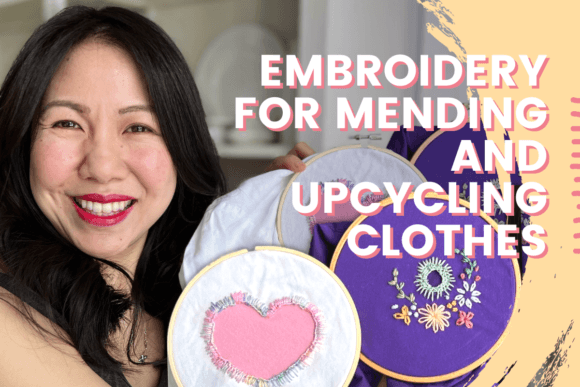
Embroidery for Mending and Upcycling Clothes
A Craft Fair Designer’s Real-World Review
As an embroidery designer who’s set up over 80 craft fair booths—from Portland’s Saturday Market to Brooklyn’s Artists & Fleas—I approach every new machine embroidery design like a product scout: Does it stop browsers? Does it translate across fabrics? Does it feel handmade without looking fussy? That’s why Embroidery for Mending and Upcycling Clothes caught my eye—not as a decorative motif, but as a story-telling anchor for small shop products.
First Impression: Warm, Purposeful, and Quietly Confident
At first glance, Embroidery for Mending and Upcycling Clothes reads as modern rustic—not too twee, not overly minimal. It doesn’t shout “festive” or “funny.” Instead, it leans into quiet intention: thoughtful stitching, visible mending, slow fashion values. That resonates deeply with today’s craft fair shoppers—especially those drawn to sustainable handmade goods, boutique makers, and Etsy sellers prioritizing authenticity over trend-chasing. It feels elegant in its utility, not just decorative.
Where It Shines on Physical Products
In my booth setup—featuring embroidered tote bags, aprons, tea towels, patches, fabric pouches, pillow covers, and market bags—Embroidery for Mending and Upcycling Clothes performs strongest when used intentionally, not ornamentally.
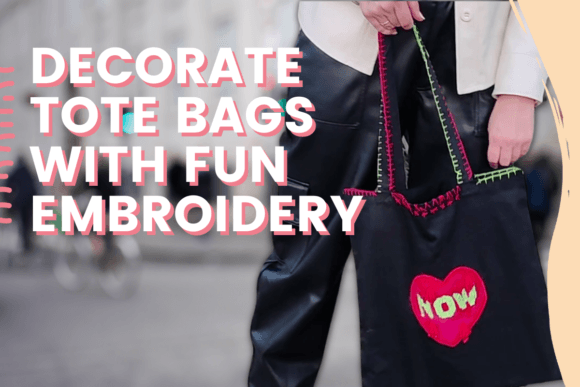
- Tote bag design: Works beautifully as a centered chest panel (10–12" wide) on natural canvas or unbleached cotton. The phrase reads clearly at scale and invites conversation—“Oh, you mend clothes? I’ve got a sweater with a hole!”
- Apron embroidery: Ideal for the lower pocket or bib corner. Feels grounded, practical, and reinforces the wearer’s maker identity.
- Tea towel embroidery: Excellent on linen or medium-weight cotton towels—especially when paired with subtle botanical motifs or darning-inspired stitch borders. Avoid dense areas near hems where folding may distort detail.
- Embroidered patch: A standout option. As a sew-on or iron-on patch, it becomes a wearable manifesto—perfect for denim jackets, backpacks, or caps. Customers love attaching meaning to their clothes.
- Fabric pouch & pillow cover: Best scaled to 4–6" wide. Smaller versions lose legibility; oversized ones risk overwhelming the item’s shape.
It’s less effective on curved surfaces like baseball caps unless simplified into a clean, condensed version—and even then, avoid tiny lettering. On dark fabric, contrast is non-negotiable: recommend high-visibility thread colors (cream, oat, soft sage) over black-on-navy or charcoal-on-charcoal.
Production Reality Check
This isn’t a “drop-and-stitch” digital embroidery file. Embroidery for Mending and Upcycling Clothes carries conceptual weight—and that means attention to execution. Here’s what I check before cutting a single piece of stabilizer:
- Stitch density: Phrases with tight kerning or delicate serifs can trap thread or cause puckering—especially on textured towels or thick denim. Always test on scrap fabric matching your final substrate.
- Hoop size & spacing: Confirm the design fits comfortably within your standard hoop (e.g., 5x7" or 6x10"). Overcrowded letterforms won’t relax under tension.
- Stabilizer choice: Use medium-weight cutaway for stretchy knits, tear-away for stable wovens, and water-soluble for sheer or delicate layers. Skip generic poly blends—they blur fine lines.
- Fabric texture matters: Linen’s slubs, terry cloth’s loops, and canvas’s weave all interact differently with satin and fill stitches. What looks crisp on mockup fabric may soften dramatically on real tea towels.
For batch production—say, 30 tote bags or 50 patches—Embroidery for Mending and Upcycling Clothes holds up well *if* consistency is prioritized. That means locking thread colors, documenting stabilizer layers, and photographing one perfect sample as your visual benchmark.
Online & Booth Impact
On Etsy or Instagram, this design photographs cleanly—especially flat-laid on neutral backgrounds. Its message is instantly legible in thumbnail size, boosting click-through for listings titled “Hand-Embellished Mending Kit” or “Upcycled Denim Patch Set.” Pair it with a short video showing the embroidery being stitched onto a frayed hem, and you’ve got emotional storytelling in under 15 seconds.
In person, it draws the curious, not just the convinced. At craft fairs, customers linger longer when they see a phrase that reflects their values—not just their aesthetic. It elevates perceived value: a $28 embroidered tote feels like a meaningful investment, not just a bag. And because it’s rooted in action (“mending,” “upcycling”), it sparks questions, stories, and repeat engagement—exactly what builds loyalty for small shop products.
Designer Notes You Can’t Skip
Before launching Embroidery for Mending and Upcycling Clothes as a craft fair product or commercial embroidery offering:
- Test the embroidery file on *each* fabric type you plan to use—not just once, but three times. Stitch quality shifts with humidity, needle wear, and thread batch.
- Compare thread colors across lighting: natural daylight, warm booth bulbs, and phone flash. What reads “oat” indoors may look gray online.
- Review letter spacing and stroke weight. Tight letters collapse on low-density fabrics; thin stems vanish on textured surfaces.
- Create at least one finished product mockup—washed, pressed, and styled—to assess drape, durability, and real-world wear.
- Verify commercial licensing status. If this is a Classes-based design asset, confirm whether resale of finished products is permitted—or if it’s strictly for personal use.
Finally: don’t treat Embroidery for Mending and Upcycling Clothes as background decoration. Let it anchor your brand voice. Print it on your booth banner. Embroider it onto your own apron. Feature it in your “why we make” story. When your message and your stitches align, customers don’t just buy a product—they join a practice.