Meow Cat Embroidery Design Review for Craft Fairs
First Glance: The Booth Appeal of Meow Cat
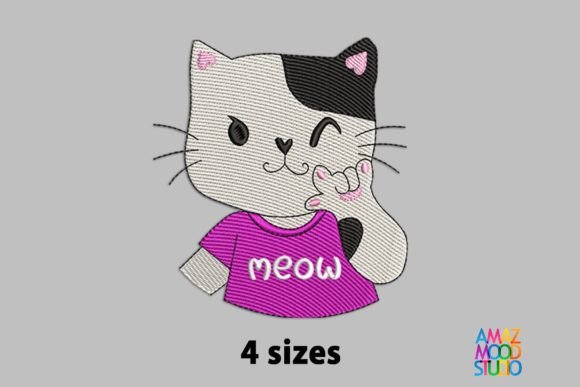
When I unzip a new machine embroidery design for my craft fair prep, I look for that instant “stop and smile” factor. Meow Cat delivers exactly that. The title alone tells me it’s meant to be cute — not quirky, not ironic, but genuinely sweet. As a designer who spends weekends behind a table draped in linen, I know that handmade product shoppers gravitate toward imagery that feels warm and familiar. A well-done cat motif on a tote bag, apron, or tea towel practically sells itself. This design promises to be the kind of accent that makes a customer pick up an item, press it against their chest, and say, “Oh, I need this.”
From the description, Meow Cat is positioned as a versatile embroidery file that works across multiple fabric types. The phrase “add a lovely accent to any fabric” hints at a design that isn’t overly dense or complex, which is a huge plus when you’re stitching on everything from thick canvas totes to delicate tea towels. I can already picture it on a mockup display: a row of cream-colored aprons with this little cat peeking out near the pocket, or a stack of folded kitchen towels where the embroidery adds just the right amount of handmade charm without overwhelming the piece.
Product Matchmaking: Where Meow Cat Shines Brightest
Not every embroidery design works on every product, no matter how versatile the description claims. I test each file mentally before I even thread a needle. For Meow Cat, I immediately see it as a tote bag design hero. A natural cotton tote with a centered or slightly offset cat face becomes an instant bestseller at a craft fair. It’s the kind of item someone grabs for a quick grocery run or a library trip, and the cute factor makes it a conversation piece.
On apron embroidery, this design would work beautifully on a bib-style apron. I’d place it on the upper chest, slightly off-center, or on a pocket. The design’s apparent softness makes it a safe bet for tea towel embroidery as well. Linen or flour-sack towels with a small cat motif in the corner look effortlessly boutique. I’ve watched customers buy entire sets of cat-themed towels just because the design felt “collected” rather than mass-produced.
For caps, I’d be more cautious. Curved surfaces and seam lines can distort delicate features. If Meow Cat includes tiny details like whiskers or small eye highlights, those might get lost on a cap’s structured front. I’d reserve cap use for a simplified version or a larger size on a dad hat with a flat front. Embroidered patch potential, however, is sky-high. Stitch it on felt or twill, add a merrowed edge, and suddenly you have a high-margin add-on product that sits in a basket at the checkout. Customers love small impulse buys, and a cat patch is practically currency in the handmade market.
For fabric pouches and pillow covers, Meow Cat could be that perfect finishing touch. A small zippered pouch with a cat on the corner becomes a delightful gift, while a linen pillow cover with a central cat motif feels like something from a high-end pet boutique. Market bags, too, are a canvas I wouldn’t overlook. The loose weave of a string market bag might challenge stitch quality, but on a canvas market tote, the design would hold up beautifully.
Booth Photography and Online Listing Potential
As both an Etsy seller and a craft fair vendor, I think about how a design photographs before I even commit to production. Meow Cat, with its clearly adorable intent, will shine in flat lays and lifestyle shots. A printable mockup showing the cat on a folded towel next to a cup of tea or draped over a market basket immediately tells a story. That story translates to a higher perceived value, which means I can charge a premium for the finished item.
For digital embroidery file sellers, this design is a strong candidate for listing photos that include multiple product previews. Show it on a tote, on a patch, on a towel, and maybe on a simple baby onesie. The more applications a customer can visualize, the more likely they are to buy the file. I’d recommend creating at least one real finished product sample to photograph. A tangible sample communicates stitch quality and thread sheen far better than a digital rendering ever could.
Production Practicalities: What I’d Check Before Stitching
Before I load this onto my machine, I’d run through a standard checklist. First, I’d confirm the hoop size required. The description doesn’t specify, so I’d check the file details. If it’s a multiple-piece design, I need to know if it’s split across hoops or if it’s a single placement. For a craft fair product line, I prefer designs that fit comfortably in a 4x4 or 5x7 hoop. Larger formats are fine for statement pieces, but smaller hoops mean faster turnover and less waste when a stitch-out has a mishap.
Stitch density is another critical factor. If the design has very dense areas, it might pucker on lightweight fabrics or create a stiff patch on a t-shirt. I’d test on a scrap of cotton first, then on a towel, and finally on a canvas tote. Dense fill stitches can also make a tea towel embroidery feel scratchy, which defeats the purpose of a towel. I’d use a soft cut-away stabilizer for towels and a tear-away for canvas. For dark fabrics, a topper is often necessary to prevent the fabric from showing through the stitches. I’d think carefully about thread colors — the description doesn’t list them, so I’d choose a palette that contrasts well with my most popular fabric colors. A charcoal cat on a cream towel looks elegant; a soft peach or blush cat on a white apron feels fresh and modern.
Any tiny details — like whiskers, inner ear shading, or small lettering — need close inspection. At a booth, customers see the product from a few feet away. If the details blur, the design loses impact. I’d test stitch one at full size, then reduce it by 10% to see if the smallest elements still hold. If the design includes small lettering (which I don’t see indicated, but it’s a common feature), I’d be extra cautious. Lettering below a quarter-inch tall can become illegible or fill in with thread, ruining the professional look.
For curved cap surfaces, I’d only attempt this design if it’s very simple and I can position it on the front panel without crossing seams. Even then, I’d use a strong adhesive stabilizer and baste carefully. On thick fabric like a canvas tote, the needle might deflect if the design is too dense, causing misalignment. I’d use a sharp needle, slow the machine down, and watch the registration like a hawk.
Building a Cohesive Booth Display Around Meow Cat
One design alone doesn’t make a booth, but Meow Cat could anchor a whole cat-themed collection. I’d pair it with complementary designs — maybe a ball of yarn, a fish skeleton, or a paw print — to create a story. Then I’d merchandise a “cat lover’s corner” with a mix of products: a hanging apron, a folded towel, a patch bouquet, a tote displayed on a hook, and a small pillow propped against a crate. This grouping draws in a specific customer, and it makes the booth feel intentional and curated.
From a brand consistency standpoint, using Meow Cat across multiple items reinforces my handmade aesthetic. A customer who buys a towel might come back for the matching tote. I’d even consider offering a bundle discount, which increases the average transaction value. The design’s cute factor is broad enough to appeal to kids, cat owners, and anyone who loves charming, whimsical accents. It’s not pegged to a specific holiday, so it sells year-round, which is a huge advantage for small shop product planning.
Careful-Use Notes for Flawless Results
Every experienced embroiderer knows that a design file is only as good as the production process. Here are my non-negotiable checks before I’d sell anything stitched with Meow Cat:
- Test on scrap fabric first, not your final product. Cotton muslin is cheap and reveals density issues fast.
- Check thread contrast. If the design uses pale colors, avoid white or ivory fabric unless you want a subtle tone-on-tone look. For a pop, use a thread color that really stands out.
- Review spacing. Watch for overlapping areas that might create a raised ridge. Small satin stitches next to fill stitches can sometimes pull.
- Confirm hoop size before you buy or download. Don’t assume it fits your largest hoop; some designs have a minimum because of registration marks.
- Inspect stitch density. If the design feels stiff on the first test, consider using a lighter stabilizer or adjusting the machine’s tension, but be cautious — changing density in the file itself requires software and licensing rights.
- Use the right stabilizer. For towels, a cut-away mesh stabilizer is my go-to. For aprons and totes, a medium-weight tear-away often works, but I’ll add a fusible mesh if the fabric is loosely woven.
- Create at least one real mockup for your booth table and your online listings. A physical sample answers customer questions before they’re even asked.
- Compare fabric colors. A cat stitched in cream on natural linen may disappear. I’d test on a few different shades to see where the design pops best.
- Confirm commercial licensing before selling any finished products. The description doesn’t mention it, so I’d check the seller’s terms. Some digital files are only for personal use, and I won’t risk a cease-and-desist at my booth.
Customer Engagement and Perceived Value
At a craft fair, you’re selling more than a product; you’re selling a feeling. Meow Cat invites a smile. That emotional reaction is what turns a browser into a buyer. When I design for my own booth, I look for elements that feel handmade, not machine-made. The slight imperfections of stitching, the sheen of quality thread, and the tactile nature of embroidery all work together. Meow Cat, with its focus on cute and lovely accents, aligns perfectly with that handmade charm.
I’d also leverage the design’s strong visual appeal in my Etsy listings. Use keywords like “cat embroidery tote,” “cute cat tea towel,” and “handmade cat patch” in titles and tags. The product itself is a keyword goldmine. For digital embroidery file sellers, the listing should highlight the multiple product mockups and emphasize that it’s a commercial embroidery design (if allowed). Buyers want to know they can use it on products they sell, so make that clear upfront.
Final Verdict from a Designer’s Worktable
Meow Cat is a design I’d absolutely add to my craft fair production line. It’s versatile, it’s cute without being childish, and it fits a wide range of products that sell well. The missing details — exact hoop size, color count, and licensing — mean I’d need to do my homework before committing, but from a pure design standpoint, it’s a winner. I can already see the pile of finished towels and totes on my booth table, and the delighted faces of customers who spot that little cat peeking up at them. That’s the real test of any machine embroidery design, and Meow Cat passes with flying colors.