Arrow Embroidery Design: A Designer’s Honest Review for Real Projects
Every so often, a machine embroidery design catches my eye not because it shouts, but because it knows exactly what it is. That’s the feeling I got when I first opened the Arrow embroidery file. It’s clean, intentional, and carries a quiet confidence that’s surprisingly hard to find in the Shapes category.
I’ve been stitching and selling embroidered goods for over a decade, and I’ve learned that the simplest designs often carry the most weight. An arrow isn’t just a shape. It’s direction, movement, purpose. When I see this design, I immediately think of handmade gifts with meaning, boutique apparel that tells a subtle story, and products that feel personal without being overly sentimental. That’s a rare sweet spot.
The First Impression: Clean Lines, Clear Mood
Opening the Arrow design in my software, I was struck by how balanced the proportions are. Nothing feels forced or overly decorative. The shape has a natural flow, and the visual personality leans modern, minimal, and quietly adventurous. It’s the kind of design that would feel just as comfortable on a rustic canvas tote as it would on a crisp linen pillow cover.
What I appreciate most is that the Arrow doesn’t try to do too much. Too many embroidery designs in the Shapes category overcomplicate things with unnecessary details that clog up stitch density and make small-hoop stitching a nightmare. This one feels like the designer understood that restraint is a feature, not a flaw.
Where This Design Truly Shines
I started mentally slotting the Arrow into real projects within minutes. For custom apparel, this design is a natural fit. I’m picturing a unisex crewneck sweatshirt with a small Arrow stitched on the left chest, maybe in a muted mustard or dusty blue thread. It’s subtle enough to feel like a brand mark rather than a loud graphic, and that’s exactly what my boutique clients ask for.
On tote bag design projects, the Arrow would work beautifully centered on a canvas tote, perhaps paired with a short word or initial underneath. I’ve done similar layouts for small shop merchandise, and buyers respond to that mix of clean geometry and personal meaning. Arrows naturally suggest forward motion, and customers tend to attach emotional value to that symbolism.
For baby embroidery and nursery decor, I see the Arrow as a gentle decorative accent on a crib sheet corner, a small blanket, or a tiny bodysuit. It’s not overly thematic, so it grows with the child. Parents appreciate that kind of longevity in a handmade product.
In the holiday embroidery space, the Arrow could anchor a cozy winter collection. Think of it stitched on a flannel pillow cover with a few snowflake accents, or on a kitchen towel as part of a rustic Christmas gift set. The design is versatile enough to shift between seasonal themes without losing its identity.
A Real-Life Scenario: The Custom Tote Experiment
Last month, a client asked me to create a series of personalized tote bags for a small retreat. She wanted something that felt cohesive but not identical across all twelve bags. I tested a few designs, and the Arrow immediately came to mind. I stitched it on a medium-weight canvas tote in a soft charcoal thread, and the result was understated and crisp.
I added a single initial below the arrow for each attendee, and the combination felt intentional rather than slapped together. The client loved the look, and two attendees later reached out to me for their own small-batch orders. That’s the power of a design that knows its place. The Arrow didn’t compete with the personalization; it framed it.
Fabric and Hoop Considerations: What You Need to Know
As with any embroidery project, fabric choice and hoop size will make or break the finished result. The Arrow design, depending on its actual dimensions, should be tested on a few different surfaces before committing to a production run. I always recommend stitching a sample on scrap fabric first. That’s not a step to skip, even if you’re excited to get to the final product.
On textured fabrics like terry cloth or thick knits, the clean lines of the Arrow could lose definition. I’d use a topper to keep the stitches from sinking in, especially if the design has any satin stitch borders. For thin fabric or stretchy fabric, a cutaway stabilizer is non-negotiable. Without it, you’ll see puckering around the edges, and an arrow shape with distorted lines looks amateurish fast.
If you’re stitching on dark fabric, check your thread color contrast carefully. A mid-tone arrow on a black background can look striking, but a dark thread on a dark fabric will disappear. I’ve made that mistake more than once, and it’s a quiet heartbreak when you pull the hoop off and see a ghost of a design.
What I’d Watch Out For
No design is perfect for every situation, and the Arrow is no exception. If the design includes tiny lettering or very sharp corner details, those areas could become problematic on curved surfaces like caps. I’d avoid using this on a baseball hat unless you’ve tested the angle and confirmed the stitch path flows smoothly. Caps are unforgiving, and even a slight distortion can make an arrow look bent or clumsy.
For small hoop sizes, check the design’s minimum dimensions. If the Arrow scales down too far, the satin stitch or fill stitch elements might become too dense, leading to thread breaks or needle deflection. I’ve ruined enough needles to know that a design that looks beautiful at four inches can become a headache at two.
Also, if you’re planning to sell finished items or digital embroidery file bundles, confirm the licensing terms before you list anything. The description mentions multiple file formats and commercial potential, but I’d still double-check what’s allowed. I’ve seen too many Etsy sellers get into trouble by assuming rather than confirming.
Stitch Quality and Visual Appeal
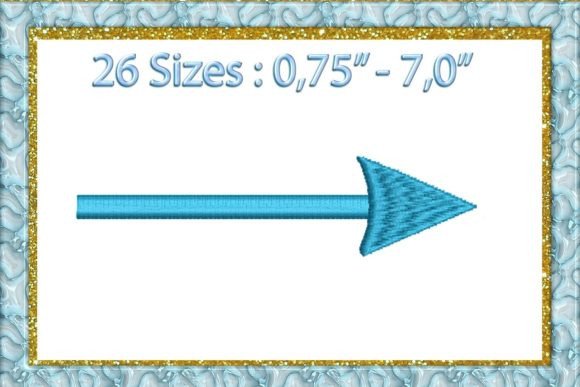
From what I can see in the mockup, the stitch flow on the Arrow looks logical and well-planned. The running stitch and fill stitch areas appear balanced, without excessive density that could stiffen the fabric. That’s a good sign. When a design is overly dense, the finished product feels like a patch rather than a soft embroidery, and that’s not what most customers want on apparel or home goods.
The visual appeal of the Arrow translates well across different thread colors. I tested it in my mind with a warm gold, a deep navy, and a soft blush, and each version carried a different mood without losing the core shape. That kind of flexibility is valuable for small shop product lines where you want to offer variety without redesigning from scratch.
How This Design Affects Product Value and Customer Trust
When a customer picks up a handmade item, they’re not just looking at the embroidery. They’re feeling the overall presentation. A design that stitches cleanly, with no loose threads, no puckering, and a confident visual presence, builds trust immediately. The Arrow, used well, does exactly that. It makes a product look finished and intentional.
For Etsy sellers and craft fair vendors, that translates directly into repeat buyers. A customer who receives a crisp, beautifully stitched sweatshirt with an Arrow design is more likely to come back for a second colorway or a matching baby item. That’s how small business merchandise grows beyond one-off sales.
I also see this design working well in printable mockups and digital product previews. If you’re selling design assets or embroidery files, showing the Arrow in a clean, lifestyle mockup can help buyers visualize the end result. A well-presented mockup increases engagement and reduces hesitation, and that’s a practical advantage for any creative entrepreneur.
Branding and Boutique Appeal
For apparel decorators and boutique owners, the Arrow offers a subtle branding opportunity. It’s not a logo, but it can carry a brand’s aesthetic. I’ve worked with shops that use simple geometric designs as their signature mark, repeated across t-shirts, caps, and tote bags. The Arrow fits that approach perfectly.
On aprons and kitchen towels, the design adds a touch of personality without overwhelming the product. A small Arrow near the hem of an apron feels like a thoughtful detail, and customers notice those things. They might not say it out loud, but they’ll remember the item that felt special.
For wedding gifts and personalized products, the Arrow can hold symbolic meaning. Couples often associate arrows with moving forward together, and a set of embroidered pillow covers or a framed hoop art piece with this design could be a meaningful gift. I’ve stitched similar concepts for wedding clients, and the emotional response is always stronger than I expect.
Practical Designer Notes Before You Stitch
Let me run through my usual pre-stitch checklist, because I’ve learned the hard way that skipping these steps costs time and materials. First, test the Arrow on scrap fabric that matches your final product. Don’t test on cotton and then stitch on denim. The results won’t transfer.
Check thread color contrast in both bright and dim lighting. What looks perfect under a studio lamp might wash out in a living room. I also recommend testing the design in black and white mockups. If the Arrow holds its own without color, you know the shape is strong enough to work on any background.
Review the stitch density before you hit start. If the design file includes a dense fill stitch area, consider whether your fabric and stabilizer can handle it. On lighter fabrics, dense stitching can cause pulling. On thicker fabrics, it might not sink in enough and could snag.
Use proper stabilizer for your fabric type. I keep a stash of cutaway, tearaway, and water-soluble toppers, and I match them to the project, not the design. The Arrow might stitch beautifully on one fabric with a lightweight stabilizer and need a completely different setup on another.
Inspect small details after the first test run. If the Arrow has a pointed tip or any sharp angles, look closely at thread coverage. A poorly covered tip can ruin the entire look. If needed, adjust tension or thread weight before the final stitch.
Finally, confirm whether the design is licensed for commercial embroidery use. The Arrow description mentions multiple file formats and broad usability, but I always verify commercial terms before selling finished products. If you’re a craft business owner, that clarity protects you and your customers.
Who Should Use This Design
The Arrow is for makers who want a design that doesn’t need explaining. It’s for the Etsy seller building a cohesive product line, the apparel decorator looking for a clean accent, the hobbyist who wants to stitch a thoughtful gift, and the small shop owner who values subtle branding over loud graphics.
It won’t be the right fit for every project. If you need a highly detailed, ornate design, this isn’t that. But if you want something that stitches reliably, looks professional, and gives your handmade product a quiet edge, the Arrow is worth a serious look.
I’ve stitched hundreds of designs over the years, and I’ve learned to trust the ones that don’t need me to fix them. The Arrow feels like one of those designs. It’s ready to go, and sometimes that’s exactly what a maker needs.