A Beautiful Flower Digital Embroidery
First Impressions: Delicate, Warm, and Quietly Confident
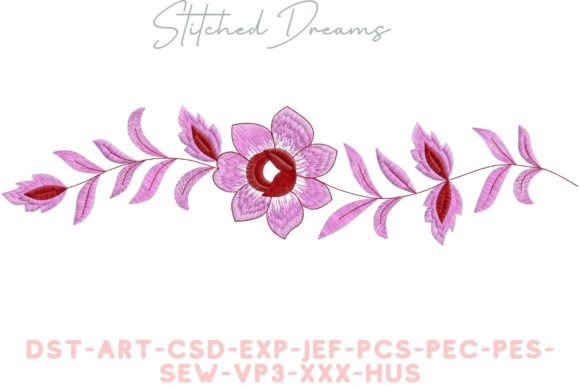
When I opened A Beautiful Flower Digital Embroidery, what struck me wasn’t just the visual charm—but how immediately it felt *usable*. Not overly fussy, not aggressively trendy, but quietly confident in its balance of detail and breathing room. The petals aren’t symmetrical clones; they curl with subtle variation, and the center has gentle texture—not a dense blob, but something that invites light and shadow. It reads as both botanical and hand-drawn, which makes it ideal for handmade products where authenticity matters more than perfection.
Real-Life Test Run: A Linen Tea Towel for a Local Boutique
Last week, I stitched A Beautiful Flower Digital Embroidery onto a natural linen tea towel—part of a small batch for a neighborhood kitchen boutique. I used medium-weight cutaway stabilizer, 40-weight cotton thread, and a 5” hoop. The design settled cleanly into the corner, about 3.5” wide. Customers responded before I even priced them: “It looks like it grew there,” one said. That’s the quiet power of this file—it doesn’t shout; it belongs.
Where It Shines (and Why)
- Custom apparel: Works beautifully on lightweight sweatshirts and structured tote bags—especially when placed off-center or along a seam for organic flow.
- Baby embroidery: Soft petals and rounded forms read as gentle and nurturing—ideal for onesies, burp cloths, or nursery pillows (just avoid tight corners on tiny garments).
- Holiday and wedding gifts: Stitched in ivory thread on oatmeal linen, it becomes timeless—not seasonal, but celebratory in a grounded way.
- Etsy seller & small shop product: Photographs well in natural light, scales nicely across mockups, and feels premium without demanding luxury pricing.
- Embroidered patch base: Clean outer edges and moderate stitch density mean it cuts and finishes cleanly—no fraying or distortion at the perimeter.
Where to Pause—and Why
This isn’t a “stitch-and-forget” design. Its strength is also its nuance—and that means attention pays off.
On stretchy fabric (like knits or lightweight jersey), I recommend basting + tear-away stabilizer underneath *and* topping with a light water-soluble film—those delicate petal tips can waver if the ground moves. On dark fabric, test thread contrast first: soft pastels may disappear unless you switch to slightly richer tones or add a subtle underlay. And while it’s lovely on curved surfaces like caps, keep placement above the bill curve—petal ends get slightly compressed below the crown line.
What It Adds to Your Finished Product
A Beautiful Flower Digital Embroidery lifts the perceived value of anything it touches—not because it’s flashy, but because it signals care. When customers see those layered satin stitches catching light on a pillow cover, or notice how the fill stitch gradates softly from center to edge on a baby blanket, they don’t think “machine embroidery.” They think “made with intention.” That builds trust, especially for Etsy sellers and craft fair vendors whose brand lives in tactile authenticity.
It also supports brand consistency. Whether you’re stitching five identical aprons for a café or personalizing ten graduation towels, the design holds its voice—neither fading nor overwhelming. And for digital product sellers? It’s a strong candidate for printable mockups: clean lines, balanced negative space, and a shape that translates well to flat lay and angled shots.
Practical Designer Notes You’ll Actually Use
- Always test on scrap fabric first—especially if using textured weaves (like bouclé or heavy twill) where stitch definition can blur.
- Review stitch density before hooping. Dense centers are fine, but if your machine hesitates or threads snag, reduce density slightly in the flower’s core—detail remains intact, stress drops.
- Confirm hoop size compatibility. This design fits comfortably in a 5×7 hoop, but check whether your version includes alternate sizes—some freebies offer scaled-down variants for smaller projects.
- Inspect small details at 200% zoom in your embroidery software. Petal tips, stem taper, and leaf junctions should be smooth—not jagged or over-digitized.
- Test in black and white mockups before finalizing listings. Does the shape hold up without color? (It does—clean silhouette, good weight distribution.)
- Compare light/dark backgrounds in your mockup tool. It gains warmth on cream, elegance on charcoal—versatile, but not neutral.
- Use proper stabilizer: medium cutaway for stable fabrics, tear-away + topping for knits or sheer layers.
- Verify licensing before selling finished items—or reselling the file. As a Freebies category embroidery file, confirm whether commercial use is permitted. When in doubt, reach out to the creator.
Final Thought: Not Just a Design—A Quiet Anchor
In a landscape full of bold fonts and maximalist motifs, A Beautiful Flower Digital Embroidery is a reminder that restraint can resonate deeply. It won’t dominate a sweatshirt front—but it will make someone pause, trace the curve of a petal with their finger, and choose that item over another. For craft business owners, that kind of quiet impact compounds: repeat customers, word-of-mouth referrals, photos shared without prompting. It’s not just an embroidery file. It’s a small, steady note of calm in a busy handmade world—and that’s rare, useful, and worth keeping close.