Arabesque Rose: A Designer's Craft Fair Review
First Impressions from the Design Table
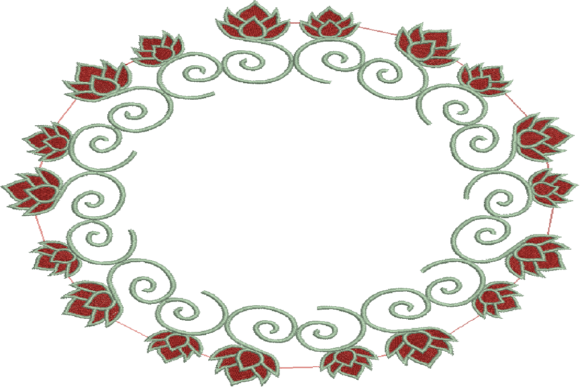
When I pulled up Arabesque Rose for the first time, I immediately felt its quiet confidence. This is not a design that shouts for attention. It leans into a soft, decorative elegance that would sit beautifully in a farmhouse kitchen, a vintage-inspired booth, or a carefully curated handmade market display. The title alone tells me we are dealing with something rooted in classic ornamentation, the kind of machine embroidery design that appeals to buyers who love detail, texture, and a sense of timeless craftsmanship.
From a designer's perspective, Arabesque Rose reads as versatile and graceful. It belongs to the Floral Wreaths category, and that makes perfect sense. Floral wreaths are a staple in the embroidery world because they frame beautifully, they work on countless products, and they carry a universal charm. The arabesque influence suggests flowing lines, interwoven botanical elements, and a balanced composition. For a craft fair product, this kind of design has a head start. It feels familiar but elevated, approachable but polished.
I can already picture this stitched onto a linen pillow cover, softening the edges of a kitchen towel, or becoming the focal point of a simple tote. The description mentions quilts, cushions, tablecloths, and placemats, and that aligns perfectly with the mood. Arabesque Rose is not edgy or trendy in a fleeting way. It is the kind of design that handmade shoppers gravitate toward when they want something that feels made with care.
Where Arabesque Rose Shines in a Craft Fair Booth
Setting up a booth is a strategic exercise. You need pieces that catch the eye from across the aisle, and you need pieces that reward closer inspection. Arabesque Rose does the latter exceptionally well. This is a design that invites the customer to lean in, to trace the curves with their eyes, and to appreciate the intricacy of the stitching. When I think about what draws a buyer into a handmade product display, it is often the promise of something special, something that feels considered. This design delivers that.
For a weekend craft fair, I would place Arabesque Rose on light to medium fabric backgrounds where the stitch definition can truly sing. Natural linen, soft cream cotton, and pale blush tones would all be excellent choices. The design's floral wreath structure means it naturally frames the center of a product, making it ideal for items where you want to create a sense of containment and balance. Think of a tea towel draped over a basket, a pillow cover propped on a wooden chair, or a tote hanging from a display hook. In each case, Arabesque Rose would anchor the product visually.
One thing I have learned from years of selling at handmade markets is that customer attention splits between two categories: the instant grab and the slow discovery. Arabesque Rose falls into the slow discovery category. It may not be the loudest piece in your booth, but it will be the one that keeps a customer standing there, and that is where the sale happens.
Tote Bags and Market Bags
A tote bag design featuring Arabesque Rose would be a steady seller. Positioned slightly off-center or centered in the lower half of a canvas tote, this design gives the bag a boutique feel. Customers at craft fairs love a tote that looks intentional, not slapped with a generic decal. The arabesque detailing elevates a simple carryall into something that feels like a premium accessory. I would test this on medium-weight cotton canvas with a medium to large hoop size to preserve the detail.
Aprons and Kitchen Towels
An apron embroidery application is where Arabesque Rose could truly become a hero piece. Picture a soft linen apron with the design stitched across the bib or pocket area. It reads as elegant, slightly rustic, and deeply appealing to the home baker or host who loves a beautiful kitchen. Tea towel embroidery is another natural fit. A set of two or three towels with Arabesque Rose in complementary thread colors would make a gorgeous gift set. I would recommend lighter fabric tones here to keep the contrast gentle and sophisticated.
Pillow Covers and Home Decor
This is where the design feels most at home. A pillow cover with Arabesque Rose centered on the front panel would be a standout in any booth. The wreath structure naturally complements a square or rectangular pillow form. I would display these on a bench or a cozy chair setup within the booth to help customers visualize the piece in their own homes. The description mentions quilts and cushions, and I can see why. This design has a soft, domestic warmth that makes it ideal for home textiles.
Patches and Small Accents
An embroidered patch version of Arabesque Rose could work on jackets, denim, or canvas pouches. However, I would caution against scaling this design down too aggressively. The intricate arabesque lines and floral details need breathing room. A patch that is too small may lose the very qualities that make the design special. If you plan to offer patches, test the smallest viable size carefully and be prepared to simplify your thread choices if needed.
Practical Production Notes for Batch Making
When I prepare for a craft fair, I think in terms of repeatable production. Can I stitch this design efficiently across multiple products without sacrificing quality? With Arabesque Rose, the answer is yes, provided you do your prep work. The design appears to be well-structured for batch production, but you will want to run a full test on scrap fabric before committing to your final materials.
I always recommend creating at least one real mockup, not just a digital preview. A printable mockup is helpful for online listings, but nothing replaces seeing the actual stitch-out on the exact fabric you plan to sell. Thread tension, fabric behavior, and stabilizer performance all reveal themselves in the physical test. I also suggest comparing fabric colors side by side. A thread that looks perfect on cream may feel too stark on white, or too muted on a darker tone.
For those selling on Etsy or running a small shop, the digital embroidery file version of Arabesque Rose is another revenue stream. Customers who purchase design assets for their own projects will appreciate clear notes on recommended hoop sizes, stitch counts, and compatible formats. If you are selling the finished product, make sure you have confirmed commercial embroidery licensing before listing items made with this design.
What to Watch for When Stitching Arabesque Rose
Every design has its quirks, and it is the designer's job to find them before the customer does. With a floral wreath like Arabesque Rose, I would pay close attention to stitch density in the overlapping areas. Wreaths often have layered leaves and petals, and if the density is too high in those intersections, you risk stiff fabric, thread breaks, or a puckered finish. A good stabilizer is non-negotiable here. I would use a medium-weight cutaway stabilizer for most fabric applications and consider a water-soluble topper for textured towels or thick fabrics.
Fabric texture matters a great deal. On smooth cotton or linen, Arabesque Rose will likely stitch out beautifully. On a thick fabric like a heavily textured towel or a curved cap surface, you may need to adjust your approach. Curved cap surfaces are particularly tricky for wreath designs because the circular composition can warp if the cap is not hooped perfectly flat. I would test on a structured cap before adding it to your product lineup.
Another consideration is dark fabric. If you plan to stitch Arabesque Rose on deep navy, charcoal, or black backgrounds, your thread colors need to be chosen with care. Light threads on dark fabric can expose gaps in coverage, and the design may need a higher density or an underlay adjustment to look crisp. Always test on your darkest intended fabric before committing to a full production run.
Small lettering is not mentioned in the description, but if the design includes any text elements, check those carefully at your intended size. Small lettering in embroidery can close up, lose legibility, or become distorted if the hoop size is too tight. The same applies to tiny details in the arabesque flourishes. What looks graceful on screen may become a tangled mess if scaled beyond the design's intended range.
Photography and Etsy Listing Tips
For Etsy sellers and online shop owners, Arabesque Rose photographs like a dream when you set it up right. Soft, natural light is your best friend here. I would shoot the design on a neutral background with a few carefully chosen props, a spool of thread, a snippet of greenery, a wooden surface. The goal is to communicate the visual appeal and handmade quality without clutter. Customers shopping for handmade products want to see the texture of the stitches, the sheen of the thread, and the drape of the fabric.
Your listing should highlight the emotional pull of the design. Arabesque Rose is not just a pattern. It is a feeling. It is the promise of a slow morning with tea, a beautifully set table, a home filled with intentional details. When you write your product description, lean into that. Mention the product value in terms of the time and care that goes into each stitch-out. Buyers who understand the craftsmanship behind commercial embroidery are often willing to pay a premium.
The Bottom Line for Your Craft Fair Inventory
Would I bring Arabesque Rose to my next craft fair? Absolutely. It is a design that supports brand consistency, elevates the perceived value of your products, and strengthens your booth display with a cohesive, sophisticated look. It works across multiple product categories, which means you can create a unified collection without repeating the exact same item. A customer who loves the tote may come back for the matching tea towel or the pillow cover.
From a buyer engagement standpoint, this design gives you a story to tell. You can talk about the arabesque tradition, the rose motif, the care you put into selecting the right thread colors and fabrics. That kind of storytelling is what separates a forgettable booth from one that customers remember and return to. In a sea of craft fair products, Arabesque Rose helps your work stand out with quiet, enduring elegance.
Before you finalize your production run, remember the essentials: test on scrap fabric, review your stitch density, confirm your hoop size, choose the right stabilizer, and check thread contrast against every fabric you plan to use. Create at least one real mockup, compare fabric colors, and double-check commercial licensing if you are selling finished goods. These steps are not optional. They are the difference between a product that delights and one that disappoints.
For the Etsy seller, the boutique maker, the creative entrepreneur, and the weekend market regular, Arabesque Rose is a design worth investing in. It is a good quality pattern with broad appeal, a timeless aesthetic, and the kind of versatility that makes machine embroidery design such a rewarding craft. Stitch it with care, display it with pride, and watch your customers fall in love.